Winter storm outages lead to power surge damage in Everson, WA homes because electricity rarely returns cleanly. Damaged lines, utility switching during restoration, and lightning can send a brief voltage spike through home wiring that harms electronics, appliance control boards, and heating equipment left plugged in or switched on when the power comes back.
Everson sits on the banks of the Nooksack River near the Cascade foothills, and winter weather can leave rural Nooksack Valley homes without power more than once in a season. This guide explains how surges happen around an outage, which equipment is most exposed, how layered protection works, and when to bring in an electrician in Everson to check your system.
Key Takeaways
- Power surges after a winter outage usually come from utility switching, damaged lines, or lightning as electricity is restored.
- Electronics, appliance control boards, and furnace or heat pump circuit boards are the equipment most likely to suffer surge damage.
- A whole-house surge protector installs at the electrical panel and protects everything connected to the home’s wiring.
- Unplugging sensitive electronics and switching off major appliances during an outage reduces the load hit by a returning surge.
- Everson homes affected by floodwater should have the electrical system inspected before power is restored to damaged circuits.
How Do Winter Storm Outages Cause Power Surges?
Winter storm outages cause power surges because the moment power fails and the moment it returns are both unstable. A power surge is a sudden, brief increase in voltage above the level your home’s wiring and devices are designed to handle.
The Electrical Safety Foundation International notes that most power surges start inside the home, such as when large equipment cycles on, while external surges come from electric utilities and lightning. Storms add to the external side of that equation in a few ways:
- Utility switching during restoration: Crews re-energize lines in sections, and each reconnection can push a short spike of voltage down the line to homes that are already back on.
- Damaged or downed lines: Wind, snow, and falling branches can cause lines to touch or partially fail, which creates unstable voltage before an outage fully sets in.
- Flickering power: Repeated on and off cycles during a storm expose equipment to several small surges in a row instead of one.
- Lightning: A strike on or near utility lines can travel into a home’s electrical system even when the strike itself is some distance away.
Working in homes across Everson, our electricians point out that surge damage usually happens in the seconds after the lights come back on, not while the power is out.
What Equipment Is Most at Risk From a Power Surge
The equipment most at risk from a power surge is anything with a circuit board or sensitive electronics. Simple devices like incandescent bulbs and basic heaters tolerate voltage swings far better than modern appliances with digital controls.
These items tend to take the hardest hit when a surge moves through a home:
- Home electronics: Televisions, computers, internet routers, and game consoles have delicate components that can fail from one strong surge.
- Appliance control boards: Refrigerators, washers, dishwashers, and ranges with electronic displays rely on boards that can be expensive to replace.
- Heating and cooling equipment: Furnaces, heat pumps, and thermostats use control boards that manage ignition, fans, and defrost cycles.
- Smart home and garage devices: Garage door openers, doorbell cameras, and smart switches are small but sensitive to voltage spikes.
Not all surge damage is immediate. Repeated smaller surges can cause cumulative wear on wiring and connected equipment over time, which is why an appliance may work after a storm and then fail weeks later.
Why Flood-Affected Everson Homes Need Extra Caution
Homes in Everson that took on water during a storm need an electrical inspection before damaged circuits are turned back on. Water inside outlets, panels, or appliance controls can cause shorts and surge-like damage the moment power returns.
Everson grew on fertile, flood-prone farmland along the Nooksack River, and the November 2021 floods showed how quickly storm damage and outages can stack up. During that flooding, scattered power outages lingered in the hardest-hit areas around Everson, Nooksack, and Sumas while residents waited for water to recede.
Based on what we see in Everson properties after high water, the safest approach is to keep power off to any area where water reached outlets, the electrical panel, or appliances until a licensed electrician has checked the wiring. Restoring power too soon can damage equipment that might otherwise have been saved.
How Whole-House Surge Protection Works
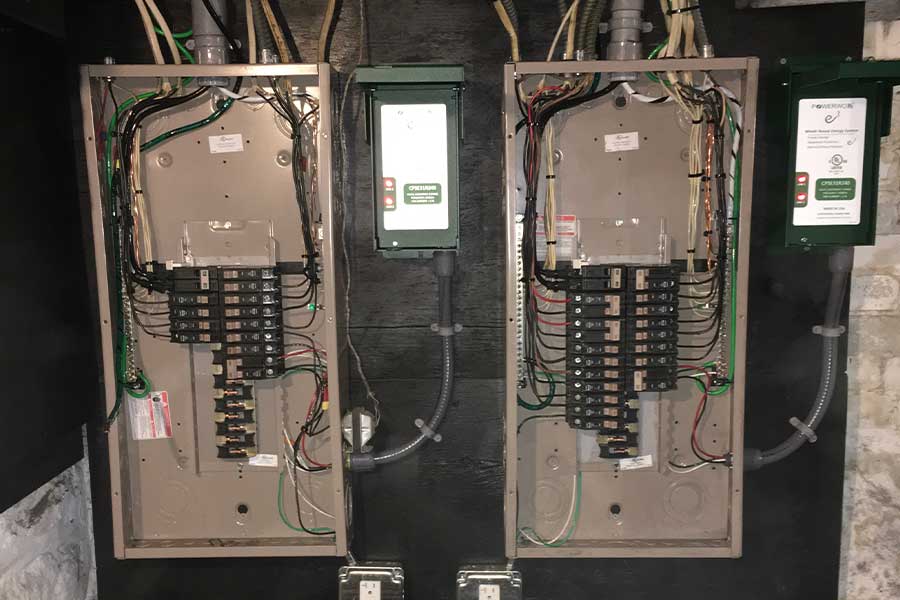
A whole-house surge protector installs at your home’s electrical panel and diverts excess voltage away from your wiring and connected devices whenever a surge occurs. Because it sits where power enters the home, it protects everything connected to the electrical system rather than just one outlet.
Standard electrical safety devices do not fill that role. ESFI points out that fuses, breakers, and GFCI outlets do not protect against power surges, since they are designed to respond to overloads and ground faults, not brief voltage spikes. A dedicated whole house surge protector is built specifically to handle that job.
Whole-house protection is worth considering when any of these apply to your home:
- Frequent outages or flickering lights during storms
- A history of storm-related electrical problems
- Several expensive electronics or appliances with digital controls
- No existing surge protection at the panel
- Past damage that traced back to a power surge
Our team would rather help you understand your actual risk and options than push equipment you do not need. Some homes need only a panel-mounted unit, while others benefit from additional protection at specific outlets.
Why Layered Surge Protection Works Best
Layered surge protection pairs a whole-house unit at the panel with point-of-use surge protectors at sensitive electronics. Each layer handles a different source of surges, so together they cover more than either one alone.
This comparison shows how the two types of protection differ:
| Feature | Whole-House Surge Protector | Point-of-Use Surge Protector |
| Location | Installed at the electrical panel | Plugged into an outlet |
| What it covers | The entire electrical system, including hardwired equipment | Only devices plugged into it |
| Best at handling | Surges entering from utility lines | Smaller surges from inside the home and residual spikes |
| Hardwired equipment | Protects furnaces, heat pumps, and built-in appliances | Cannot protect hardwired equipment |
| Installation | Installed by a licensed electrician | Set up by the homeowner |
For most Everson households, the practical setup is a panel-mounted unit for the whole home plus surge-rated strips for computers, televisions, and networking equipment.
What to Do During a Winter Power Outage in Everson
The most effective step during a winter outage is to reduce how much equipment is connected when power returns. Fewer active devices means less exposure to a restoration surge and a gentler load on the system.
These safe steps help protect your home while the power is out:
- Unplug sensitive electronics: Disconnect televisions, computers, routers, and game consoles until power has been stable for a while.
- Switch off major appliances: Turn off the dishwasher, washer, dryer, and range, and set the thermostat to off so heating equipment does not start the instant power returns.
- Leave one light switched on: A single lamp lets you know when service is back without leaving everything else exposed.
- Wait before reconnecting: Give the power several minutes to stabilize, then turn equipment back on one item at a time.
- Stay clear of downed lines: Treat every fallen line as live and report it to your utility rather than approaching it.
Signs Your Home Took a Surge and Needs an Electrician
A home that took a surge may show electrical warning signs that need a professional, not just a reset. Any of these after a storm means it is time to have the system checked:
- Flickering or dimming lights that continue after power is restored
- Breakers that trip more often than before the outage
- Outlets or switch plates that feel warm
- Buzzing or crackling sounds from outlets, switches, or the panel
- Burning smells near outlets
- Lights or appliances that will not turn on even though the rest of the home has power
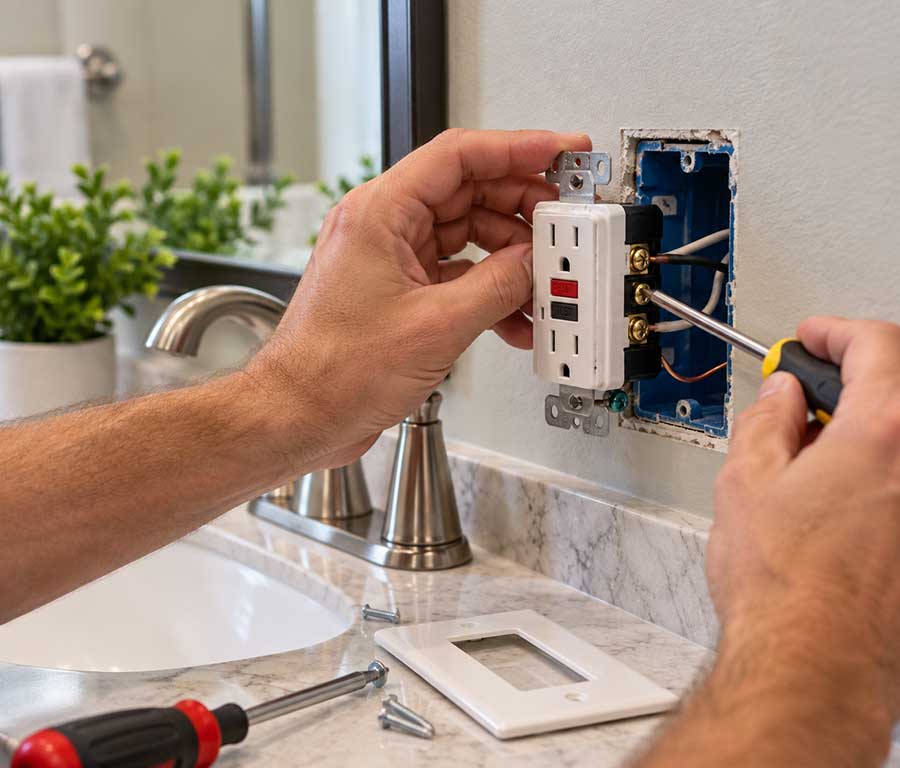
Sparking, burning smells, or unexpected power loss should be addressed quickly. If it is safe to reach the panel, switch off the affected circuit and keep it off until an electrician can inspect it. Our electrical repair process starts with a thorough inspection to find the cause, followed by a clear explanation of your options before any work begins.
Frequently Asked Questions About Power Surge Damage in Everson
Do regular power strips protect against power surges?
No, a regular power strip does not protect against power surges unless it is specifically rated as a surge protector. ESFI notes that typical power strips do not provide surge protection, so Everson homeowners should check the packaging for a surge rating before relying on one during storm season.
How long does whole-house surge protector installation take?
Most whole-house surge protector installations are completed within a couple of hours. Scheduling the work in fall, before winter storms start rolling through the Nooksack Valley, means the protection is in place when outages are most likely.
Can a surge protector stop damage from a direct lightning strike?
No surge protector can promise full protection from a direct lightning strike on a home. Whole-house and point-of-use protection are designed for the far more common surges that travel through utility lines, which is where most storm-related damage in Everson homes comes from.
Does a surge protector need to be replaced after a big surge?
A surge protector can lose some of its capacity after absorbing large or repeated surges, and many units include an indicator light that shows whether protection is still active. After a rough storm season in Everson, it is worth checking those indicators and having an electrician look at the panel unit if anything seems off.
Is there a way to get my electrical panel checked every year?
Yes, the LSM HomeCare plan includes a free annual electrical panel scan for members. An annual check gives Everson homeowners a regular chance to catch storm-related wear before it turns into a bigger repair.
Protecting Everson Homes From Storm Surges
Power surge damage in Everson usually happens when power returns after a winter outage, and the best defense is layered protection combined with smart habits during the storm. LSM Heating, Plumbing, & Electric has served Whatcom County families since 1940, and our licensed electricians can evaluate your panel, recommend the right level of surge protection, and repair any damage a storm leaves behind. Before the next storm season arrives, schedule an electrical inspection with our team.